
Buying guide
Electric vs Diesel Vacuum Lifter: How to Choose for Your Site
Every Vlentec vacuum lifter up to 25,000 kg comes in an electric and a diesel version. They lift the same pipes with the same suction pads and the same safety system. The difference sits in where the power comes from, and that single choice decides how the lifter fits your carrier, your site and your maintenance schedule.
The short answer
Start with your carrier, not with the lifter
Choose electric when the lifter runs on an excavator with a 12 to 24 Vdc supply, when work happens indoors or in an enclosed yard, or when noise and emissions are part of the site rules. Choose diesel when the carrier has no power supply to connect to, when the lifter moves between cranes, loaders and side booms, or when you need the 32,000 kg class, which is diesel only.
Everything else in this article explains why.
What is actually different
A vacuum lifter needs a pump to pull the air out of the suction pad and a control system to monitor and hold the vacuum. On an electric lifter the pump is driven by an electric motor that takes its power from the carrier or from an interchangeable battery pack. On a diesel lifter the pump is driven by an onboard Yanmar engine, so the lifter is fully self-contained and does not depend on the machine it hangs from.
What does not change: the suction pads, the rotator, the wireless remote control and the safety concept. The alarm system on every Vlentec lifter runs on its own 24 Vdc supply with backup batteries, so a loss of carrier power does not mean loss of load, on either version.
| Criterion | Electric (ED series) | Diesel (SC series) |
|---|---|---|
| Power source | Carrier 12 to 24 Vdc supply, or an interchangeable battery pack | Onboard Yanmar diesel engine, independent of the carrier |
| Emissions on site | Zero in operation | Engine exhaust |
| Noise | Silent pump: warning signals are heard, crew can talk | Engine noise during operation |
| Refuelling | None | Diesel tank on the lifter |
| Engine maintenance | Electric motor is maintenance-free; no fuel filter, engine air filter or engine oil | Regular engine service: filters, oil, fuel system |
| Pump running hours | Reduced by up to 90% in field experience, which stretches pump service intervals | Pump runs with the engine |
| Carriers | Excavators; cranes and forklifts with a battery pack | Any carrier: excavator, crane, loader, side boom |
| Capacity range | 12,500 kg (ED125N) and 25,000 kg (ED250N) | 12,500 kg (SC125N), 25,000 kg (SC250N) and 32,000 kg (SC320N) |
When electric is the right choice
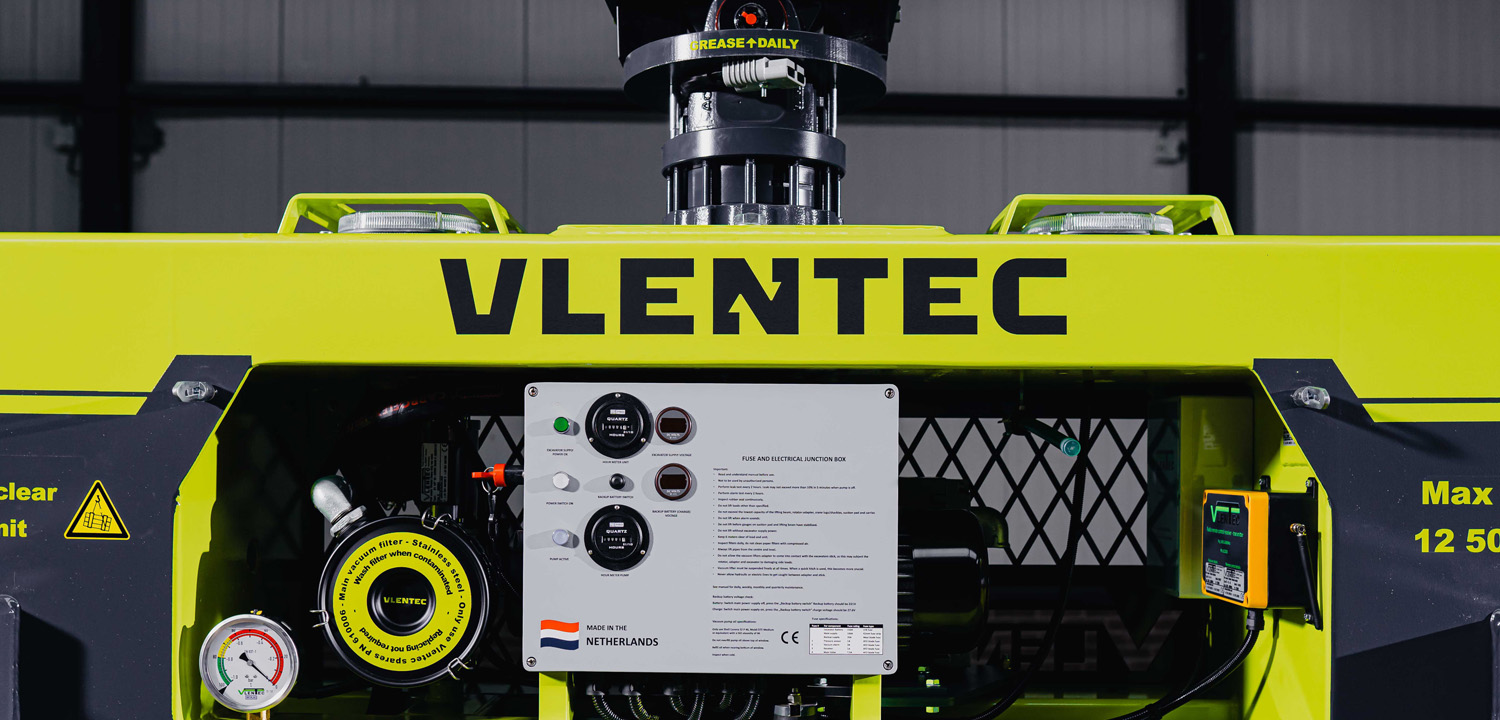
Excavator work with a fixed carrier
If the lifter spends its life on one excavator with a 12 to 24 Vdc supply, electric is the obvious pick. The cable runs through the centre of the rotator with a slip ring, so rotation stays unlimited and there is nothing to tangle or disconnect. You lose a fuel tank, an engine and a refuelling stop, and you gain a lifter that is ready the moment the excavator starts.
Indoor and enclosed sites
Pipe mills, coating plants and storage halls are where the electric version pays for itself fastest. No exhaust in a hall, no engine noise over the production floor, and the operator reads the vacuum level on the remote handset instead of walking to a gauge on the lifter.
 Zero emissionsNo exhaust in operation, which matters on sites with emission limits and inside buildings.
 Less downtimeNo refuelling, no engine service, and up to 90% fewer pump running hours.
 Safer communicationA silent pump means alarms are heard and the crew can talk without shouting.
The electrification of the Vlentec range also replaced mechanical parts with digital pressure switches and controllers, so status lights and alarms switch more precisely. Electric is not a compromise version of the diesel lifter. On a suitable carrier it is the better machine.
When diesel is the right choice
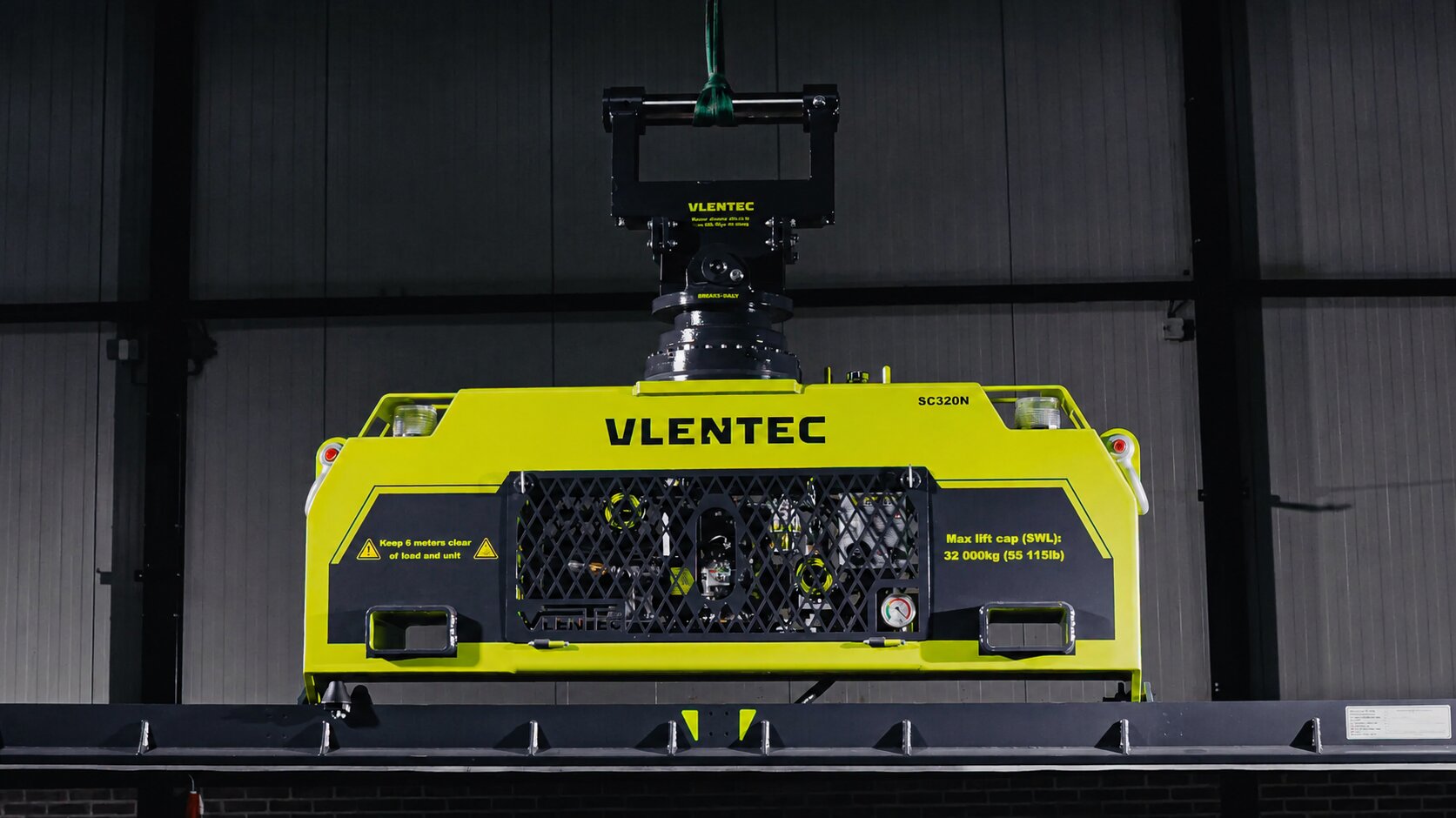
No power on the carrier
Cranes, wheel loaders and side booms usually do not offer a 12 to 24 Vdc supply at the hook. A diesel lifter does not need one. It hangs from the lifting lugs, starts on its own engine and runs completely independently of whatever is carrying it. On a pipeline right-of-way where the lifter moves between a side boom in the morning and a crane in the afternoon, that independence is the whole point.
Heavy pipe above 25,000 kg
The 32,000 kg class is available as the diesel SC320N only. For large-diameter, thick-wall and concrete weight-coated pipe there is no electric alternative in the range, so the decision makes itself.
The engine behind it
Vlentec fits its diesel lifters with Yanmar engines, chosen for reliability on sites where a breakdown means a stalled pipeline crew. If you run diesel plant already, a Yanmar-powered lifter slots into the same service routine and parts supply. Read why Vlentec works with Yanmar.
The carrier question, and the battery pack that changes it
The classic rule was simple: excavator means electric, crane means diesel. The interchangeable battery pack blurs that line. An electric lifter fitted with a battery pack runs on its own power on a crane, an indoor gantry or a forklift, and the smallest pack handles up to 600 lifting operations before it needs recharging. When the lifter goes back onto the excavator, the carrier charges the battery while the motor runs on both supplies.
So the real question is not "which carrier" but "how many carriers, and where". One excavator: electric. One crane in a hall: electric with battery pack. A fleet of mixed carriers on an outdoor spread: diesel. All Vlentec lifters have forklift sleeves integrated into the frame and can be installed on any carrier in minutes, so switching is quick either way. More on carrier compatibility and power supply.
Maintenance and cost over the lifetime
Purchase price is one line in the calculation. The lines that grow over five years are fuel, filters, engine oil, service hours and downtime. On the electric version the combustion engine is gone, and with it the refuelling, the fuel filter, the engine air filter and the oil changes. Field experience shows the pump's running hours drop by up to 90%, which extends the pump's maintenance interval and cuts maintenance cost by the same factor.
Both versions share the improvements Vlentec built into the whole range: two-stage air filtration where the first stage can be washed or blown clean, a maintenance-free vacuum valve and an extra durable rubber seal developed specifically for pipe lifting. So the diesel lifter is not a high-maintenance machine. It simply carries an engine that the electric one does not.
- Electric wins on running cost, noise and emissions.
- Diesel wins on independence from the carrier and on the 32,000 kg class.
- Safety, pad range, rotator and remote control are identical.
The Vlentec range at a glance
All models are compatible with the same range of suction pads and attachments.
Still weighing it up? A short-term project with an unfamiliar carrier is a good reason to rent a lifter first and see which version fits your crew before you buy.
Frequently asked questions
Can an electric vacuum lifter work on a crane?
Yes, with an interchangeable battery pack. The lifter then runs independently of the crane, and the smallest pack covers up to 600 lifting operations per charge.
Does the electric lifter hold the load if the excavator loses power?
Yes. The alarm and safety system runs on its own 24 Vdc supply with backup batteries, and the vacuum reserve keeps the load in place. This applies to the diesel version as well.
Is the diesel version less safe because of the engine?
No. The safety system, vacuum reserve and remote control are identical. The differences are noise, emissions and the engine's own maintenance.
Which version should a pipe coating yard choose?
Usually electric. Coating yards are enclosed, run repetitive lifts all day and benefit most from zero emissions and a silent pump.
Can I switch from diesel to electric later?
The suction pads and attachments are shared across the range, so pads bought for a diesel lifter carry over to an electric one of the same capacity.

Would you like to learn more about vacuum lifting technology?
Brendan Boelema, CEO & Owner
Personal Advice